Sight Words Word Search
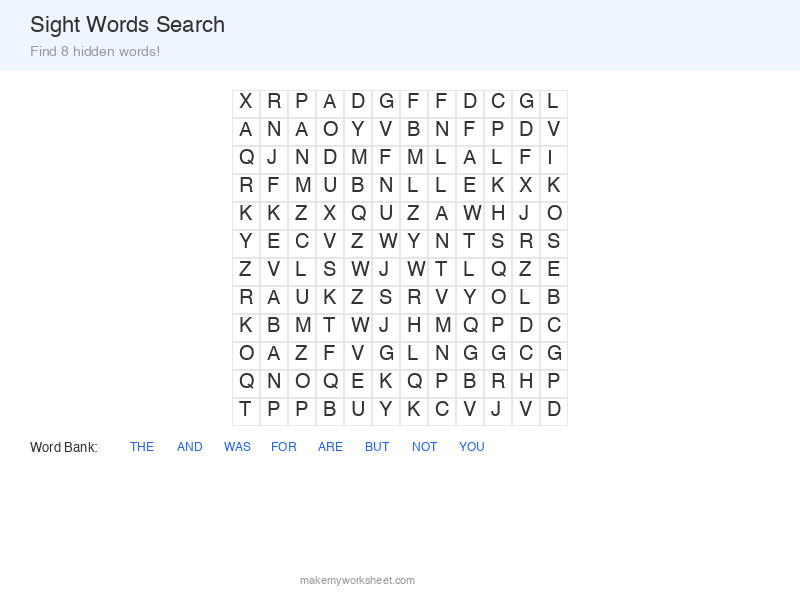 Printable · US Letter · Free
Sight words are the foundation of reading fluency. These high-frequency words — such as the, said, have, and come — appear so often in text that children need to recognize them instantly, without sounding out each letter. This free printable word search gives early readers a fun, low-pressure way to practice spotting these essential words.
What Are Dolch and Fry Sight Words?
Two widely used sight word lists form the backbone of early reading instruction. The Dolch list, created by Edward William Dolch in the 1930s, contains 220 common words organized into grade levels from pre-kindergarten through third grade. The Fry list, developed by Dr. Edward Fry, includes the 1,000 most common English words ranked by frequency. Together, the first 100 Fry words account for roughly 50% of all written material children encounter. Mastering these words is one of the fastest paths to independent reading.
How Word Searches Build Reading Fluency
When a child searches for the word because in a grid of letters, they must hold the letter pattern in their mind and scan systematically. This repeated visual exposure trains the brain to recognize the whole word shape rather than decoding it letter by letter. Over time, words that once required effort become automatic, freeing up mental energy for comprehension instead of just decoding.
Word Recognition Practice
Unlike flashcards, which present words in isolation, a word search embeds sight words within a field of random letters. This challenges children to distinguish the target word from distractors, building the same kind of discrimination they need when reading a line of printed text. Words featured in this puzzle include common Dolch and Fry entries like they, would, about, many, which, could, other, and their.
Tips for Using This Worksheet
- Pre-readers (ages 4-5): Read the word list aloud together first. Point to each word so your child connects the spoken word with its printed form before searching.
- Beginning readers (ages 5-6): Let your child try reading the word list independently. Use the puzzle as a confidence builder after a phonics lesson.
- Fluent beginners (ages 7-8): Time the puzzle for a fun challenge, or have your child write a sentence using each word after finding it in the grid.
Beyond the Puzzle
After completing the word search, extend the learning by playing a quick game. Call out one of the sight words and ask your child to spell it from memory, or have them find the word in a book or magazine. Repetition across different contexts is the key to moving sight words from recognition into automatic recall.
Working on a specific sight word list? Build a custom puzzle with exactly the words you need.
Generate Custom Word Searches →More Word Searches
For more strategies on teaching reading at home, visit our guide on the best homeschool worksheets by grade.